Imprisonend in the Oranjehotel
8 graphic narratives about war and resistance
8 graphic narratives about war and resistance
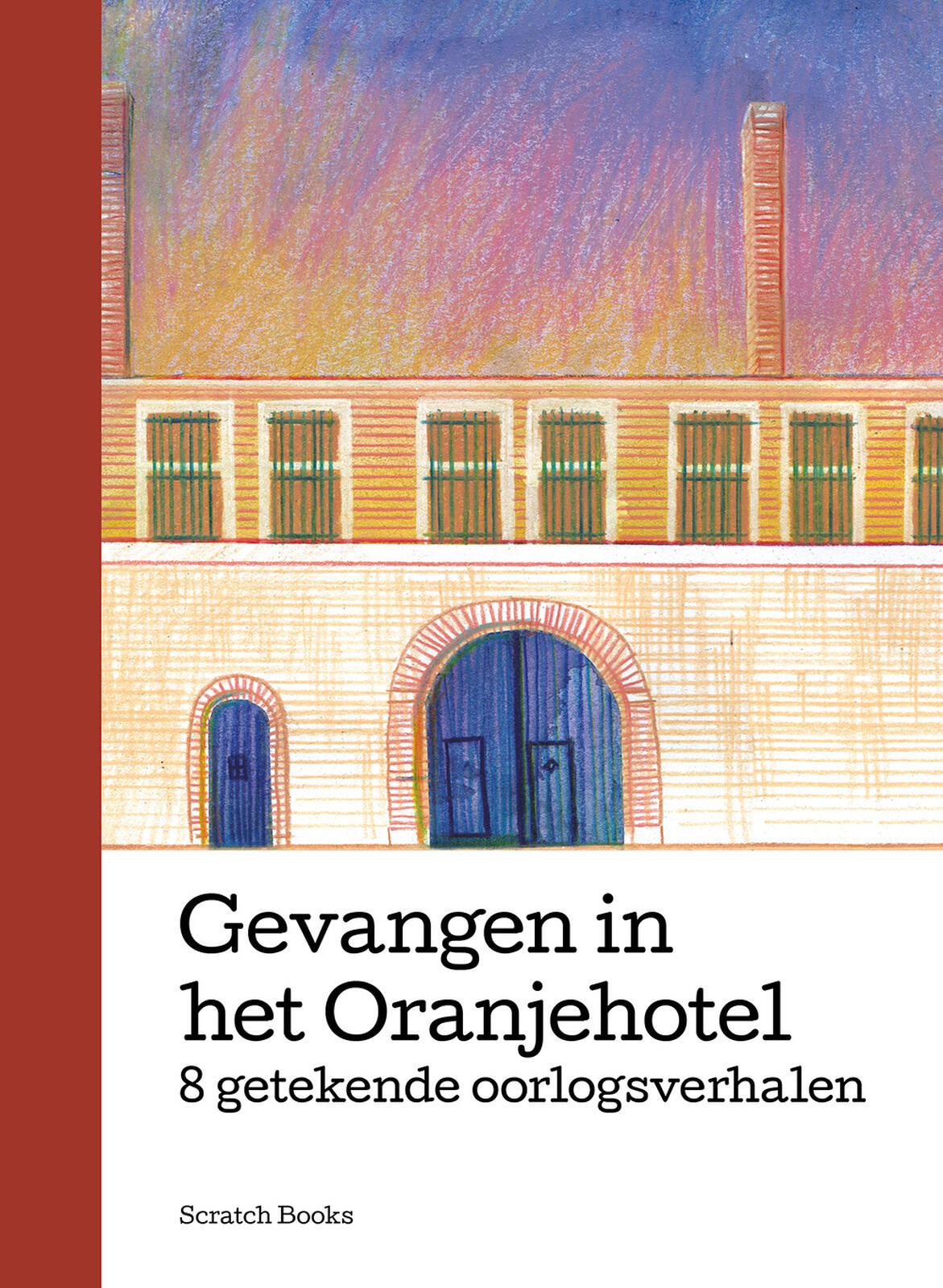
National Monument Oranjehotel, asked Scratch books to curate a book about life in the prison otherwise known as Het Oranjehotel. A Dutch prison that became a ‘Polizeigefängnis‘ in the second World War. About 25,000 people were imprisoned here between 1940 and 1945 for interrogation and ‘trial’. They were arrested for acts the German occupier considered offences: the usual suspects were accompanied by people who committed (small) acts of resistance, who listened to the ‘wrong’ radiostation, who spoke up, who helped those who needed help or those who were considered offensive by being a Jew, a communists or a Jehovah’s Witnesses.
8 comic artist were invited, who all drew a 10 to 12 page story about a different aspect of this history.
Together with Tânia Alexandra Cardoso, Nova de Hoo, Sterric, D’Avellonne van Dijk, Guido van Driel, Jan Vriends en Pieter Brouwer I commemorated some of the heroes who spend time in the tiny cells because they stood for what they believed in.
Cover illustration by Tânia Alexandra Cardoso
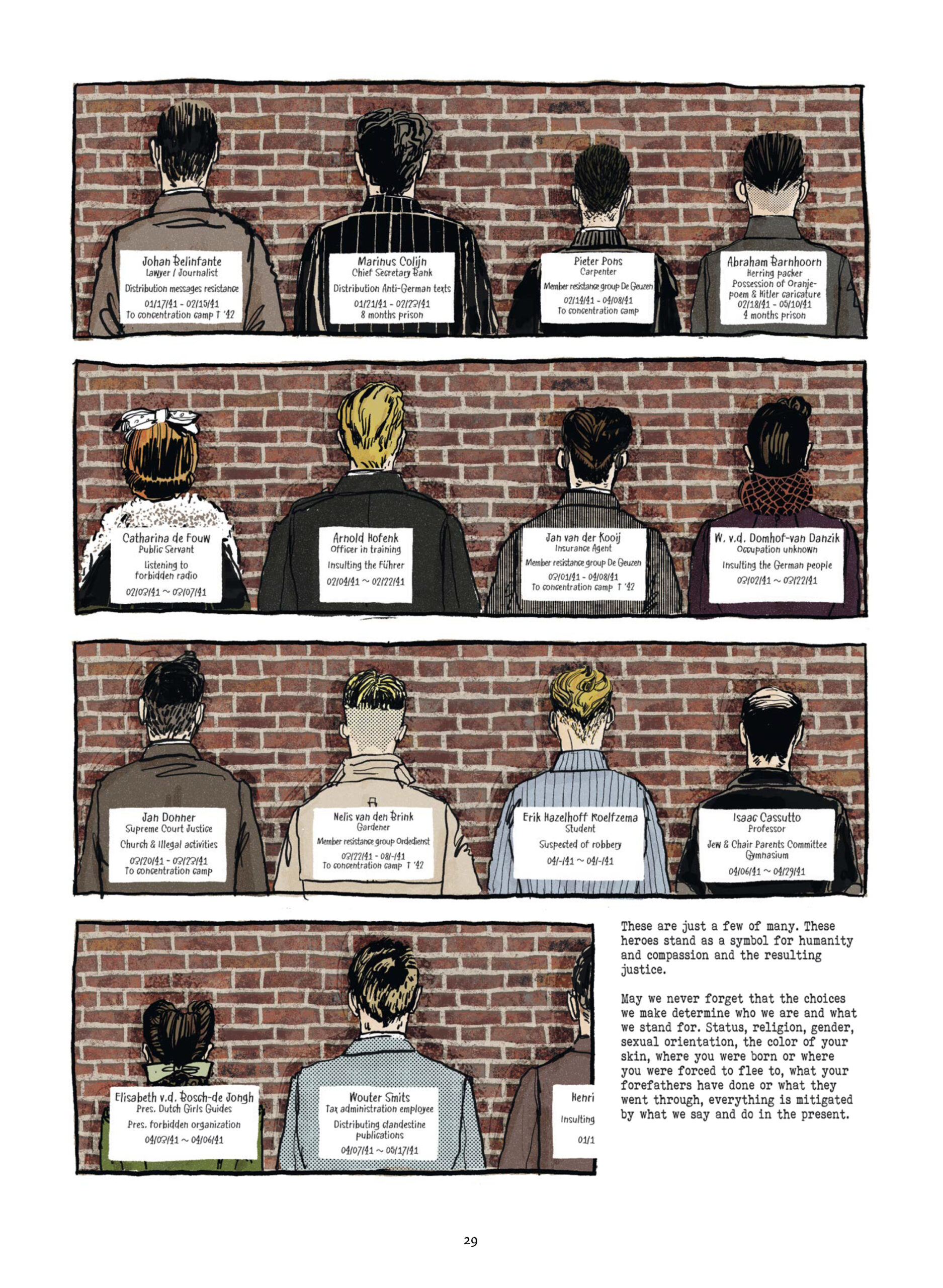
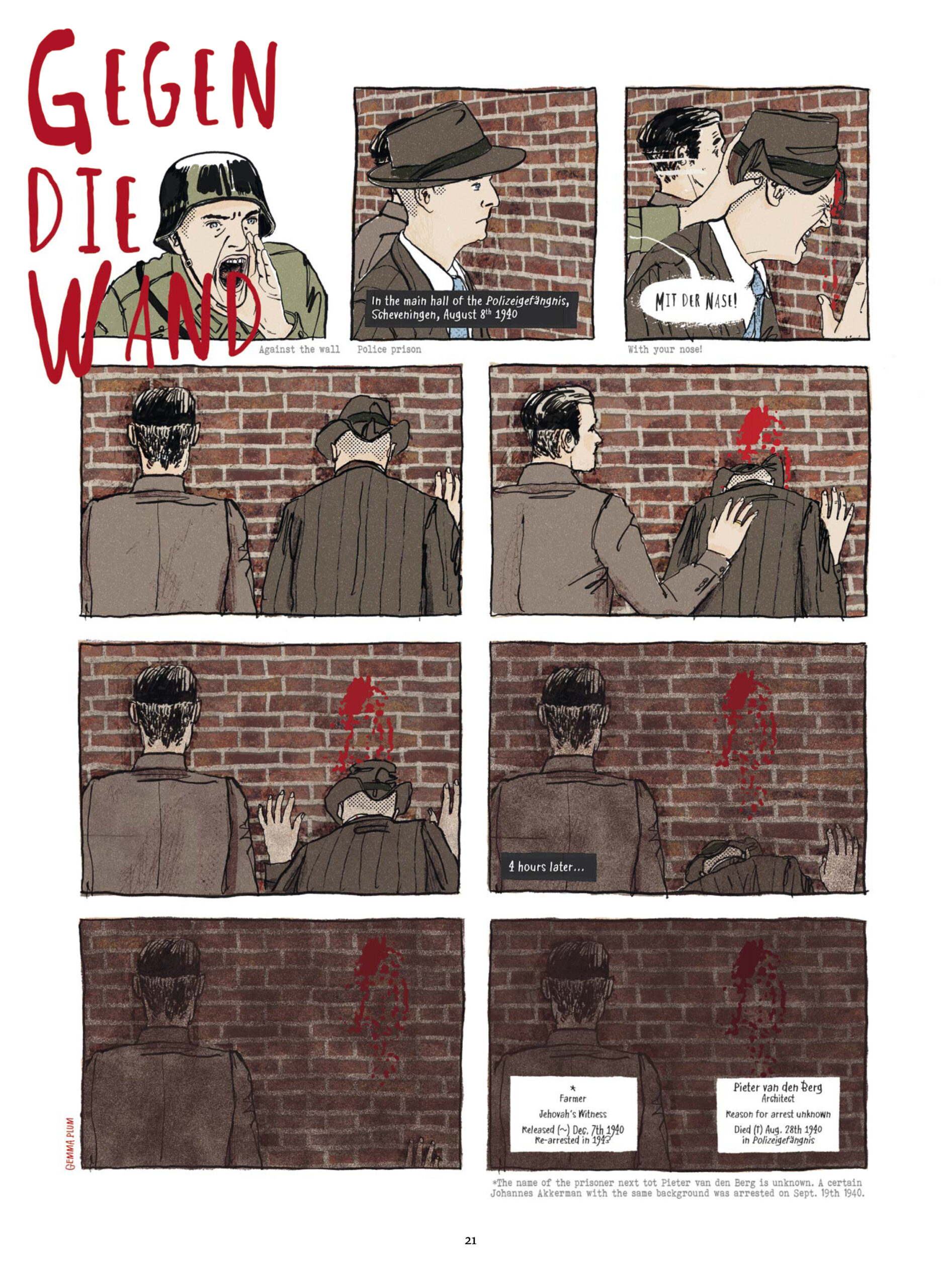
I choose to focus on the arrest and the ‘crimes’ of the inmates. All the people depicted represent real people. My drawings and stories are based on facts and photo’s from the archive. I didn’t change their names. Honouring those brave and unlucky people by remembering them and their acts of resistance.
Three of these people and these stories get a more in-depth approach.
Professor Clevinga who spoke up when a college and mentor was fired because he did not have an Aryan declaration, a statement that was required in certain positions during the Second World War, a form that declared they were not Jewish.
Ernst Cahn who tried to defend his life and livelihood by organising Amsterdam shopkeepers, helping them tot take a stand against vandalism and terrorisme.
And Jacoba (Koos) Blom-Schuh who dared to call out the bullies and committed brilliant acts of small resistance.


These are just a few of many. These heroes symbolize human decency.
So that we may never forget that the choices we make determine who we are and what we stand for. Position, religion, gender, sexual orientation, origin, skin color, where you were born or where you were driven to flee, what you, your parents or forefathers and -mothers have done or endured. All of this pales in comparison to our words and our actions in the present.
The book is published in Dutch, English and German and reviewed in and on: 9ekunst.nl, Bunt Blogt, De Boekenkrant van februari 2026, Uit de Kunst Den Haag Centraal van 6 februari 2026, …